
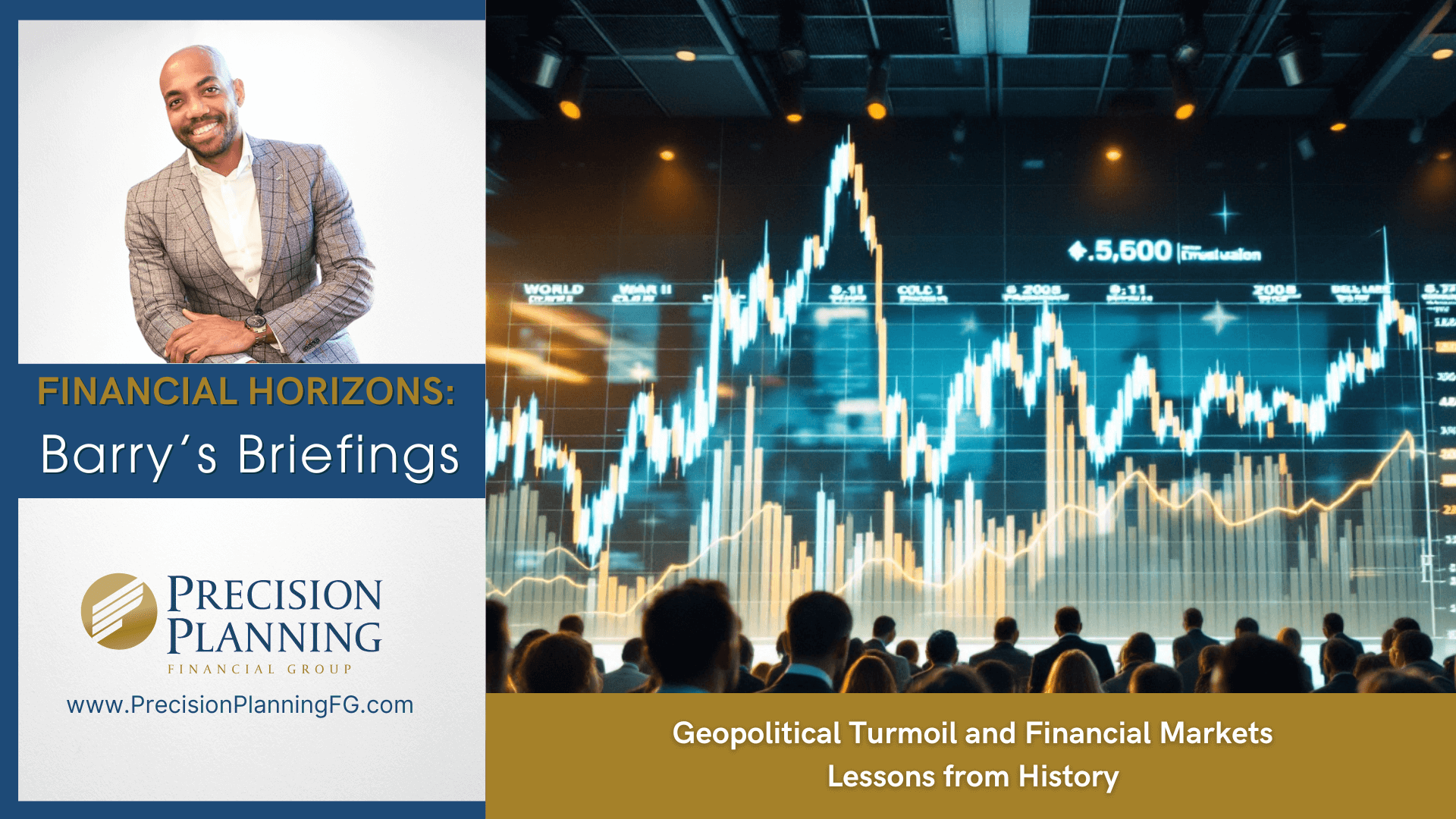
Uncertainty is nothing new to financial markets. Every generation faces moments of geopolitical tension, economic shifts, and global crises that shake investor confidence. From world wars to financial meltdowns, history has taught us a valuable lesson: While volatility is inevitable, resilience and strategic planning win the long game.
As we navigate today?s geopolitical landscape, it?s worth looking back at how markets have responded to past crises?and what lessons we can apply moving forward.
A Look Back: How Geopolitical Events Have Shaped Markets
World War II (1939?1945): The Market Rebounds from Uncertainty
During the early years of WWII, markets experienced extreme volatility as fear gripped the global economy. However, as the war effort ramped up and post-war economic expansion took shape, the stock market saw a significant recovery. The U.S. emerged as an economic superpower, and long-term investors who stayed the course saw substantial gains.
The war effort itself played a major role in revitalizing industrial production, leading to massive government spending. The period following the war saw unprecedented economic expansion, with rising employment, infrastructure development, and the creation of the middle class as we know it today.
Lesson: Markets often overreact to crises but tend to recover as stability returns. Long-term investors who remain patient benefit from economic rebounds. Additionally, government intervention in times of crisis can be a catalyst for economic recovery and innovation.
The Cold War & Oil Shocks (1947?1991): Inflation and Energy Prices Drive Markets
The Cold War era was marked by prolonged geopolitical tension, military conflicts, and energy crises. The 1973 oil embargo, triggered by Middle Eastern geopolitical strife, caused oil prices to quadruple, leading to skyrocketing inflation and economic stagnation in the U.S. The stock market suffered periods of stagflation?low growth combined with high inflation?that created a challenging investment environment.
This period also saw increased government intervention in monetary policy. The Federal Reserve took aggressive measures to curb inflation, including interest rate hikes that slowed economic growth but ultimately stabilized inflation in the 1980s.
Lesson: Geopolitical conflicts can have a direct impact on inflation and energy markets. Investors should consider hedging strategies and diversified portfolios that include commodities and inflation-protected assets. Moreover, central bank policies play a crucial role in managing economic stability during periods of global turmoil.
9/11 Attacks (2001): A Shock to the Global Economy
The tragic events of September 11, 2001, caused immediate market panic. The stock market was closed for nearly a week, and when trading resumed, the Dow dropped nearly 7% in a single day. However, within months, markets stabilized, and long-term investors who held their positions avoided significant losses.
The U.S. government responded with a combination of aggressive fiscal and monetary policies, including interest rate cuts and economic stimulus packages. The post-9/11 period also saw a surge in defense and technology sector investments, which contributed to market stabilization.
Lesson: Shocks to the financial system can be intense but often short-lived. Staying invested and avoiding panic-driven decisions are key to weathering sudden market downturns. Furthermore, economic recovery often comes from government stimulus and shifts in industry demand.
2008 Financial Crisis: Systemic Risk and Long-Term Recovery
The collapse of Lehman Brothers and the subsequent financial crisis led to one of the most severe market downturns in modern history. The S&P 500 dropped nearly 50% from its peak, and the housing market collapsed, wiping out trillions in wealth. However, those who stayed invested saw full recovery and record-breaking gains in the following decade.
???
The 2008 crisis exposed the risks of excessive leverage and inadequate regulation in the financial sector. The response included the Troubled Asset Relief Program (TARP), Federal Reserve interventions, and significant regulatory changes to prevent future systemic risks.
Lesson: Financial crises test investors' patience, but they also create opportunities. Market corrections can offer smart entry points for long-term investors. Moreover, risk management and diversification are critical in ensuring portfolio resilience.
Russia-Ukraine War (2022?Present): Energy Markets and Inflation Concerns
The Russia-Ukraine conflict triggered a surge in global energy prices, supply chain disruptions, and inflationary pressures. As Europe scrambled for alternative energy sources, global markets saw increased volatility. Despite this, markets adapted, and long-term investment strategies remained effective.
The war underscored the importance of energy independence, leading to a shift in global energy policy. Countries have accelerated investment in renewable energy and alternative sources to reduce dependence on geopolitically unstable regions.
Lesson: Global conflicts can impact specific sectors?especially commodities and energy?but markets find ways to adjust. A diversified portfolio remains one of the best defenses against geopolitical risks. Additionally, industries responding to major shifts, such as renewable energy, can present new investment opportunities.
What This Means for Investors Today
Today?s geopolitical climate includes ongoing conflicts, trade tensions, and economic shifts that contribute to market uncertainty. However, history reminds us that while short-term volatility is inevitable, long-term growth remains a constant.
Here?s how investors can navigate today?s landscape:
1. Stay Invested and Avoid Emotional Decisions
Panic-selling during times of crisis often locks in losses. Historical data shows that markets tend to rebound, rewarding those who stay invested.
2. Diversify to Reduce Risk Exposure
Geopolitical events can impact specific industries?like energy, defense, and technology?more than others. A well-diversified portfolio helps manage risk.
3. Consider Inflation-Protected and Safe-Haven Assets
Treasury Inflation-Protected Securities (TIPS), commodities, and gold often provide stability during periods of high inflation or geopolitical uncertainty.
4. Keep a Long-Term Perspective
Short-term turbulence is inevitable, but investors who focus on long-term goals benefit from the market?s overall growth trajectory.
5. Work with a Trusted Advisor
Uncertain times call for steady guidance. At PPFG, we help clients navigate volatility with confidence, ensuring that their financial plans remain aligned with their long-term vision.
Lessons from History, Confidence in the Future
Geopolitical uncertainty isn?t new?it?s a recurring theme in financial history. But through every crisis, the economy has found ways to recover and grow.
Smart investing isn?t about avoiding risk altogether; it?s about managing it wisely. By staying informed, diversified, and focused on long-term financial goals, investors can not only withstand uncertainty but also find opportunities in challenging times.
If you have questions about how today?s geopolitical events could impact your investments, let?s talk. Our goal is to help you navigate market uncertainty with confidence and clarity.
_______________________________________________________________________
A diversified portfolio does not assure a profit or protect against loss in a declining market.
Additional risks are associated with international investing, such as currency fluctuations, political and economic stability, and differences in accounting standards.
Cetera does not offer direct investments in gold/silver (commodities). Commodities are volatile investments and may not be suitable for all investors.